As an Amazon Associate this site earns from qualifying purchases.
Quick Picks: Steam Tools Worth Considering If the Iron Is Beyond Saving
| Product | Published specs | Best for | Link |
|---|---|---|---|
| SALAV GS18 Full-Size Clothes Steamer - 1500W Power | 1500W, 1.8L tank, 60-minute steam, adjustable pole and wheels | Long sessions where refilling mid-job is the annoyance | Check Price on Amazon |
| Travel Steamer Iron for Clothes | 6 smart modes, 12-second heat-up, 2-in-1 steamer and iron, 150ml tank, 120V | Fastest published heat-up of the three; suitcase use | Check Price on Amazon |
| OGHom Travel Steamer for Clothes | 1200W, LCD display, 4 steam levels, dry iron mode, 20s heat-up, 150ml tank, ceramic heat panel | People who want to see and set the steam level, not guess it | Check Price on Amazon |
Disclosure: We earn a small commission from qualifying Amazon purchases at no extra cost to you.
As an Amazon Associate we earn from qualifying purchases. This page contains affiliate links, and we may receive a commission if you buy through them — at no extra cost to you.
As an Amazon Associate, we earn from qualifying purchases.
Last Updated: September 2026
Here's the short answer: your iron leaks water because the soleplate isn't hot enough to flash water into steam, the tank is overfilled, mineral scale is blocking the steam channels, or the steam trigger is being worked at a fabric setting too cool to support it. Almost every leaking or spitting steam iron traces back to one of those four, and three of them cost nothing but patience to fix.
Work through the causes in order. Do not start by buying a new appliance — start by ruling out the free fixes.
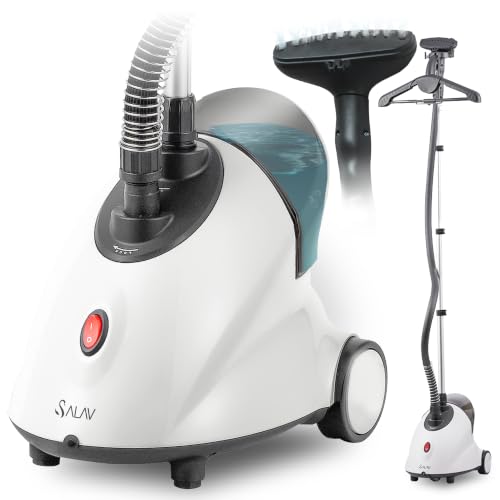
- POWERFUL 1500W STEAMER – HEATS IN 45 SECONDS: Quickly smooth wrinkles with the SALAV GS18 Professional Standing Garment Steamer for Clothes, delivering up to 1500 watts of
- FAST WRINKLE REMOVER FOR ALL FABRICS: Refresh and smooth clothing, dresses, shirts, bedding, curtains, upholstery and more. Gentle steam works across fabrics including silk
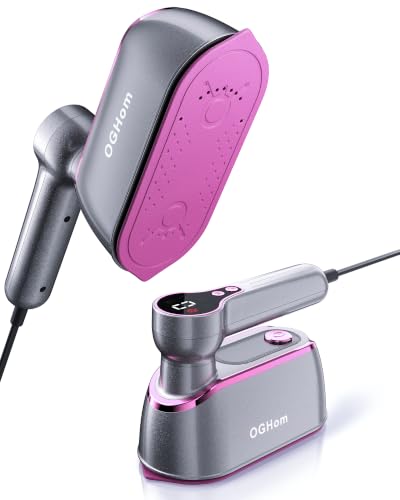
- 【4 Steam Levels + Dry Iron Mode】Customize your ironing experience with four adjustable steam settings and one dry iron mode. From delicate silk to thick cotton, this steamer for
- 【2-in-1 Vertical & Flat Ironing】Use as both a garment steamer and a compact iron. Steam hanging clothes with ease or lay garments flat for collars, cuffs, hems, and stubborn
The Problem: Four Real Causes of a Leaking Iron
- The soleplate is below steam temperature. Steam only exists above the boiling point at the plate. If you pull the trigger during warm-up, or on a synthetic/low setting, the water in the chamber never converts. It travels through the vent holes as liquid and lands on your shirt.
- The tank is overfilled. Past the fill line, water sits where the steam chamber needs air. Tilt the iron and it simply runs out of the nearest hole.
- Mineral scale has narrowed the steam channels. Hard tap water leaves deposits inside the chamber. Restricted channels mean pressure builds and then releases in a wet, gritty spit rather than a dry hiss — the classic "my steam iron is spitting water" complaint, often with brown flecks.
- The steam control is left open while the iron is parked or moving slowly. Sitting on its heel with steam engaged, the iron keeps feeding water into a chamber that isn't cycling. It condenses and drips on the next pass.
Step-by-Step Solution
- Unplug the iron and let it cool completely. Every step below happens cold except the flush.
- Empty the tank fully. Pour it out over a sink, holding the iron upside down over the filler port. You would be surprised how often a leak is just "too much water."
- Refill to the marked line — not past it. The line is there because the chamber above it is intentionally empty.
- Set the dial to the highest fabric setting the garment allows, and wait for the ready light to settle before touching steam. Rushing warm-up is the single most common cause of drips.
- Do a self-clean or descale cycle if your model has one, following the manufacturer's sequence in its manual. Expect discolored water and mineral grit to come out. Repeat until it runs clear.
- Clear the vent holes. Cold, dry, with a cotton swab. Do not push anything metal into a steam port.
- Wipe the soleplate. Burnt starch and melted synthetic fiber around the holes disrupt steam flow and get mistaken for leaking.
- Switch to distilled or demineralized water unless your manufacturer specifically warns against it — some models are designed for a tap/distilled mix. This prevents the problem from returning.
- Close the steam control whenever you set the iron down. Free habit, immediate result.
Why Your Iron Leaks When It's Not on Steam
An iron that dribbles with the steam control closed points at the valve, not at you. Residual water in the chamber is escaping past a seal that no longer seats. Descaling sometimes frees a valve stuck open by scale — try it once. If it persists, stop using the appliance on clothing you care about.
If you suspect a genuine manufacturing defect rather than user error, check the CPSC's recall listings at cpsc.gov before continuing to use the appliance. And USA.gov's consumer protection page explains how to file a complaint when a manufacturer or retailer won't stand behind a defective product.
Tools and Products You'll Need
Be clear-eyed about what follows: none of these three is a traditional soleplate steam iron. All three are garment steamers, and two of them publish a built-in iron or dry-iron function. If you need a hard press with a crease — dress shirts, uniform trousers — a steamer is not a replacement. If your actual goal is wrinkle removal without water spotting your fabric, a steamer sidesteps the leaking-soleplate problem entirely, because the water is supposed to leave as vapor at the head.
SALAV GS18 Full-Size Clothes Steamer - 1500W Power — Best for long steaming sessions without refills
The retailer listing for this model publishes 1500W of power, a 1.8L water tank, up to 60 minutes of garment steam, and an adjustable pole with wheels for storage. Look at what those two figures imply together: 1.8 liters feeding a claimed hour of steam is a machine built for a full closet or a rack of costumes, not one shirt.
The wheels-and-pole design is the tell — this is a standing unit that lives in a corner, not something that goes in a drawer.
Pros: Largest published tank of the three by a wide margin; highest published wattage at 1500W; the hour-long steam figure means you are not interrupting a session to refill.
Cons: It's floor furniture. A pole-and-wheel standing steamer needs dedicated storage space that a handheld doesn't, and the listing does not publish a heat-up time, so you cannot compare its readiness against the handhelds below on published data.
Travel Steamer Iron for Clothes — Best for the fastest published heat-up
This one lists 6 smart modes, a 12-second heat-up, a 2-in-1 steamer and iron design, a 150ml water tank, and 120V operation. That 12-second figure is the fastest published heat-up among the three products here, which matters specifically for the hotel-room case: you are steaming one outfit, and warm-up time is most of the job.
The 2-in-1 framing is the relevant part for anyone reading this page. If your iron's valve has failed, a unit that also functions as an iron covers both jobs.
Pros: 12-second published heat-up beats the other handheld's 20 seconds; 6 modes and a combined steamer/iron function in one 150ml body.
Cons: The 150ml tank is a fraction of the SALAV's 1.8L, so refills during a real laundry session are unavoidable. The listing states 120V, which rules it out for overseas travel on 230V mains — an odd limitation on a product sold as a travel steamer. The listing also does not publish a wattage figure, so you cannot compare its steam output against the other two.
OGHom Travel Steamer for Clothes — Best for controlling steam level on delicate fabrics
The listing publishes 1200W, an LCD display, 4 steam levels plus a dry iron mode, a 20-second heat-up, a 150ml tank, and a large ceramic heat panel, rated for 120V only. Here's why the LCD and four levels matter on a page about leaking: overshooting steam on silk or synthetics is what makes water spot fabric in the first place. A visible level selector is a control the other handheld's "6 smart modes" doesn't describe as clearly.
Pros: 4 selectable steam levels with an LCD readout; a dry iron mode for pressing; 1200W published, which is a real figure you can compare — unlike the other handheld, whose wattage isn't listed.
Cons: Its 20-second heat-up is slower than the 12 seconds the other handheld publishes, and its 1200W is below the SALAV's 1500W. Same 150ml tank limit, and the listing explicitly restricts it to 120V.
> Recommended Products > > - Steaming a full wardrobe: SALAV GS18 Full-Size Clothes Steamer - 1500W Power — 1.8L tank, 60 minutes of steam. > - One outfit, fast: Travel Steamer Iron for Clothes — 12-second heat-up, 2-in-1 steamer and iron. > - Delicates and fine control: OGHom Travel Steamer for Clothes — 4 steam levels with an LCD display.
Tips for Best Results
- Fill to the line, never above it. This alone resolves a large share of drip complaints.
- Let the ready light cycle off, then on again, before the first steam burst.
- Descale on a schedule rather than after a failure, if you're on hard water.
- Empty the tank when you finish, and store the iron upright on its heel.
- Iron dry first, steam second, on anything that water-spots.
Common Mistakes to Avoid
- Pulling the steam trigger during warm-up. The chamber isn't hot yet. You are pumping liquid onto fabric.
- Using vinegar in a chamber the manufacturer didn't approve it for. Follow the manual's descale instructions; acid can damage some coatings and seals.
- Poking a needle or pin into the vent holes. You'll score the seat and turn an intermittent drip into a permanent one.
- Blaming the iron for a fabric problem. Starch residue on the soleplate produces spitting that no repair fixes until you clean the plate.
- Assuming a steamer replaces an iron. It doesn't set a crease.
How We Research
This website does not run a lab and does not conduct product research. For this page, the product facts come from one source type: Amazon Creators API verified product records for the three listings above, retrieved 2026-09-05. We read the published specifications closely, compare them arithmetically against each other, and state what a figure implies for a specific buyer. Where a listing does not publish something — heat-up time for the SALAV, wattage for the Travel Steamer Iron — we say so rather than estimating.
Frequently Asked Questions
Why is my steam iron spitting brown water? Brown flecks indicate mineral scale or burnt residue inside the steam chamber. Run the manufacturer's self-clean or descale cycle repeatedly until the water runs clear, then switch to distilled water.
Why does my iron leak when it's not on steam? That points to a steam valve or gasket that no longer seals. Descaling occasionally frees a valve held open by mineral buildup; if it doesn't, the iron needs service or replacement.
Can I use tap water in a steam iron? Many models allow it, but hard tap water is the main cause of scale-related spitting. Check your manual — some manufacturers specify a tap/distilled mix rather than pure distilled water.
Will a garment steamer solve my leaking iron problem? It sidesteps it, since a steamer's water is meant to leave the head as vapor rather than through a soleplate. But a steamer won't press a crease, so it's a substitute only if you were steaming out wrinkles anyway.
Which of these steamers is best for travel? Both handhelds carry a 150ml tank, but the OGHom Travel Steamer for Clothes and the Travel Steamer Iron for Clothes are each listed for 120V only, so neither suits overseas trips on 230V mains.
Is a leaking iron dangerous? Water escaping a hot appliance is a burn risk and, if it reaches the electrical housing, a shock risk. Unplug it, and check for a recall at cpsc.gov if you suspect a defect.
Final Verdict
Fix the iron first. Overfilling and impatience during warm-up explain more leaks than hardware failure does, and both are free to correct. Descaling handles most of the rest.
If the iron is genuinely done and you're replacing the function rather than the exact tool, the split is straightforward on published specs. For volume — a full closet, an event, a household — the SALAV GS18 Full-Size Clothes Steamer - 1500W Power is the only one here with a 1.8L tank and a 60-minute steam figure, and that is a different class of job than a handheld covers. Check Price on Amazon
For delicate fabrics where too much steam is what ruins the garment, the OGHom Travel Steamer for Clothes and its 4 steam levels with an LCD readout give you a control you can actually see. Check Price on Amazon
None of the three replaces a proper crease. Be honest with yourself about which job you're actually doing.
Related Resources
- Garment steamer vs iron: which one you actually need
- How to descale a steam iron properly
- Distilled water in steam irons: when it helps and when it doesn't
- Best travel steamers for small bags
Sources & Methodology
No one at this website physically or laboratory-tested these steamers — nothing here was plugged in, timed, filled, or run against a garment. What informed this page is the Amazon Creators API verified product record for each of the three ASINs, retrieved 2026-09-05, read for the specifications the manufacturers chose to publish and compared against one another where the same figure appears for more than one unit. For a category like this, published data settles the questions that matter most before purchase — tank capacity, wattage, heat-up time, voltage limits, and whether a dry-iron mode exists — while it cannot settle build durability or how a seal holds up after a year of hard water, so treat those as open questions.