As an Amazon Associate this site earns from qualifying purchases.
Quick Picks
Honesty about this table first: of the six products with verified records available for this guide, exactly one is a steamer. The other five are consumables, replacement parts and stands. They are labelled as such. An accessory is not an appliance, and inflating one into the other is the fastest way to waste your money.
| Product | What it actually is | Best for | Link |
|---|---|---|---|
| Garment Steamer Quick Wrinkle Removal | The steamer unit itself | Buyers shopping for the appliance | Check Price on Amazon |
| SALAV Garment Steamer Descaling Solution Packets for Build-up Removal | Descaling consumable, 5 packets | Hard-water households with an existing steamer | Check Price on Amazon |
| FewNvWa Garment Steam Ironing Machine Guide Hose with Nozzle | Replacement hose with nozzle | Replacing a cracked or leaking steam hose | Check Price on Amazon |
| HLSONHENGM Clothes Steamer Guide Hose with Brush Steamer Pipe Garment Steamer Parts High Performance Replaces Parts Steam Nozzle | Replacement hose with brush and nozzle | Restoring both hose and fabric brush at once | Check Price on Amazon |
| Steamer Hanger Stand-34-66.8 inches | Height-adjustable steaming stand | Steaming long garments at a set height | Check Price on Amazon |
| Garment Steamer Stand for Clothes – Adjustable Steaming Rack with Hanger – Foldable & Portable for Travel & Home | Foldable, portable steaming rack | Small apartments and travel | Check Price on Amazon |
Disclosure: We earn a small commission from qualifying Amazon purchases at no extra cost to you.
As an Amazon Associate, we earn from qualifying purchases.Last Updated: September 2026
Most garment steamer shopping goes wrong at exactly the same point: the listing photo shows a crisp linen shirt, and the specification table shows almost nothing. This garment steamer buying guide is written to close that gap. It explains which published numbers actually predict how a clothes steamer behaves on fabric, which ones are decoration, and what you should do when a listing simply declines to tell you.
One ground rule, stated up front: this website does not do product research. Nothing here was worn, timed, weighed or plugged in. What follows is close reading of verified product records and retailer listing data, plus reasoning from those facts — and where a figure is missing, this guide says it is missing rather than filling it in.
What you will learn:
- How handheld and full-size steamers genuinely differ, and which one fits your laundry habits.
- Why wattage is the most useful number on a steamer spec sheet, and how to handle a listing that omits it.
- What water tank size actually buys you in minutes of continuous steaming.
- Which accessories decide whether you still use the steamer in month six.
- The mistakes that turn a new steamer into a return label.
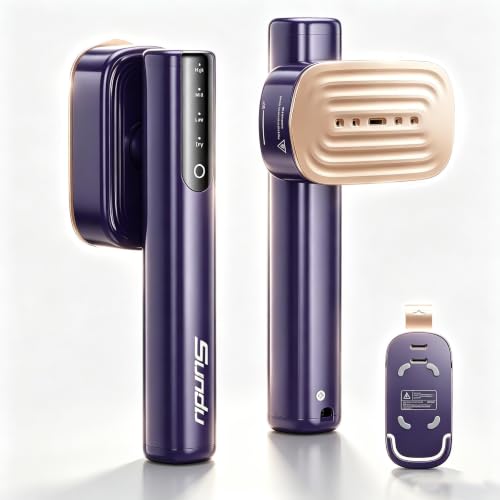
- 【2-in-1 Garment Steamer】The Sundu 2-in-1 Travel Steamer features an AI-powered temperature control system (320°F-356°F) and a ceramic soleplate. Its 90° rotating design enables
- 【Powerful Steam Output】The Sundu Professional Travel Steam Iron delivers 1200 watts of powerful steam with 15-second rapid preheating, releasing 25g/min of intense steam. Steam
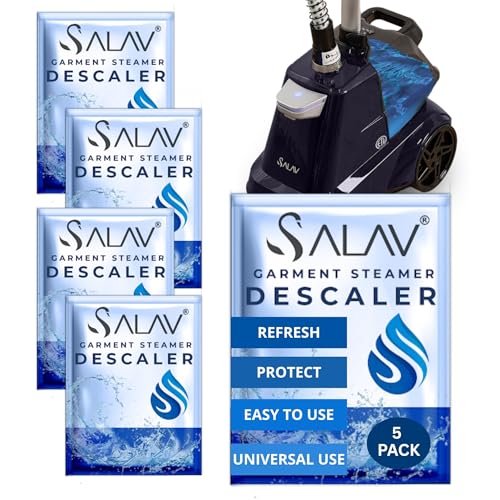
- POWERFUL DESCALING ACTION – Effectively dissolves tough limescale and mineral build-up inside garment steamers to restore full steam power and keep clothes looking smooth and
- SAFE & UNIVERSAL FORMULA – Non-corrosive, eco-friendly solution safe to use in all garment steamer brands and models, preventing costly damage and prolonging appliance life
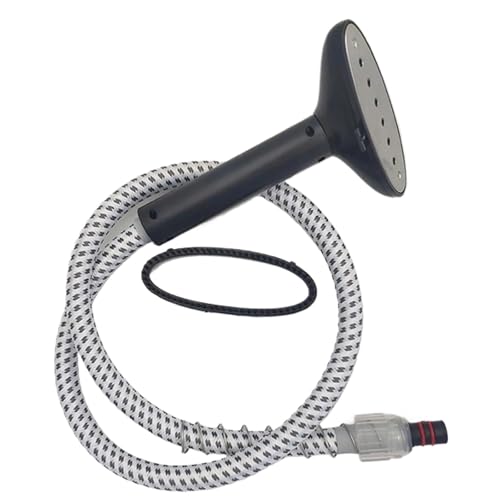
- Panel:15.5cmx6cm/6.10inchx2.36inch
- hose connector:2cm/0.79inch
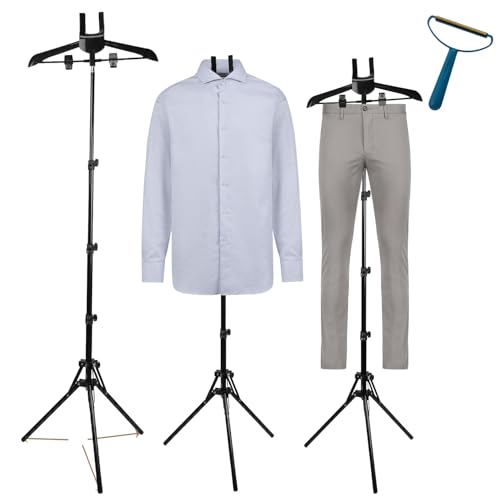
- Handheld garment steamer rack overall height 34-66.8 inches / 169.7cm)
- The hanger with clamps,clips for steaming of pants,jeans and skirts easily to take care of varieties of garments,ironing Handheld garment steamer can be hung on a hanger
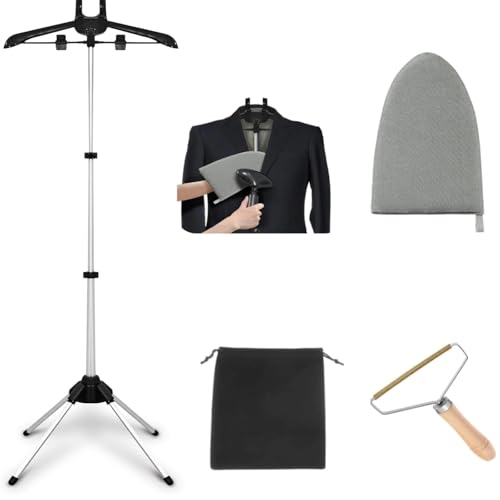
- Package Includes: 1 steamer stand for clothes with clips and 1 ironing glove、1 hair remover, 1 storage bag, everything you need.The adjustable steamer stand for clothes allows you
- Easy Management of a Variety of Clothing: The garment hanger & ironing glove features two clips at the top, perfect for securing heavy garments and hanging items like skirts
What a Garment Steamer Actually Does
A garment steamer heats water into vapour and drives it through fabric that is hanging vertically. The vapour relaxes the fibres, and gravity plus a light pass of the head does the rest. That is the whole mechanism.
An iron works by a different logic: heat plus mechanical pressure against a flat board. That pressure is why an iron gives you a knife-sharp trouser crease and a steamer does not. It is also why an iron scorches synthetics that a steamer leaves alone.
So the choice is not "which is better". It is which failure mode you can live with. If your wardrobe is suits, silk, drapes and knitwear, a steamer is the correct tool. If it is oxford shirts with collar creases you want to stand up on their own, keep an iron in the cupboard. Plenty of households sensibly own both — see our garment steamer vs iron comparison for the full breakdown.
Types of Garment Steamers Explained
| Type | How it works | Strengths | Trade-offs | Who it suits |
|---|---|---|---|---|
| Handheld / travel steamer | Small in-body reservoir, boiler in the handle | Packs into a carry-on, no assembly, steams a shirt where it hangs | Small reservoir means frequent refills; no hose, so wrist angle does the work | Frequent flyers, dorm rooms, one-or-two-garment jobs |
| Full-size upright steamer | Floor-standing base with a larger tank, steam delivered up a flexible hose | Longer continuous run, hose lets you steam two-handed, usually ships with a pole and hanger | Footprint and storage; hose and nozzle become wear parts | Households steaming several garments in a session |
| Steam iron / hybrid | Soleplate contact plus steam burst | Creases, hems, and pressing seams | Needs a board; risk on delicate synthetics | Anyone who needs true pressed creases |
| Accessory ecosystem | Hoses, nozzles, brushes, descaler, stands | Extends the life of a unit you already own | Not a steamer; fit is model-specific | Existing owners repairing or upgrading |
The handheld garment steamer vs full size steamer question really comes down to session length. Handhelds win on storage and travel. Full-size units win the moment you are steaming a jacket, two dresses and a set of curtains in one go, because you are not walking back to the tap every few minutes.
Key Features to Look For, Ranked by Importance
1. Published wattage. It is the boiler's power budget and the closest thing to a performance number you get. More power generally means faster heat-up and steam that holds up during a long pass instead of thinning out.
2. Tank capacity and refill design. Capacity sets the ceiling on session length. A removable, wide-mouth tank matters more than most buyers expect, because a fixed tank you have to carry the whole unit to the sink to fill is a chore you will start avoiding.
3. Heat-up time. A steamer you have to plan around is a steamer you stop using. This is a published figure on better spec sheets; treat its absence as information.
4. Hose and nozzle build. On a full-size unit, the hose is the part that fails. Cracks, kinks and condensation spitting all start there. Check before you buy whether replacement hoses exist for the model — a unit with no parts channel is disposable by design.
5. Descaling path. Every steamer boils water, and boiling water leaves minerals behind. A manufacturer that sells its own descaling consumable is at least admitting the maintenance exists.
6. A stand or hanging solution. You cannot steam what you cannot hang taut. A door frame works until it doesn't.
7. Safety behaviour. Auto shut-off and dry-boil protection matter on an appliance that combines mains voltage with a water reservoir. The U.S. Consumer Product Safety Commission publishes recall notices and safety alerts for consumer products at cpsc.gov, and it is worth a thirty-second search on any brand you have not heard of.
How Many Watts for a Clothes Steamer?
Here is the direct answer, and it is not the one most articles give you. Wattage is the number that best predicts steam output and heat-up speed, but this guide will not quote you a threshold, because no listing covered here publishes one. Amazon's listing data for the Garment Steamer Quick Wrinkle Removal does not state a wattage rating, a tank capacity, or a heat-up time.
So use wattage as a comparative tool, not an absolute one. Compare two units in the same form factor from the same manufacturer, and the higher-wattage one will generally recover steam faster between passes. Comparing a handheld's wattage to a floor unit's tells you very little, because the handheld is heating a much smaller volume of water.
And treat an unpublished wattage as a data point in itself. Manufacturers publish numbers they are proud of. A listing that leads with lifestyle photography and never names a single electrical specification is telling you which part of the product it wants you looking at.
Garment Steamer Water Tank Size
Tank size converts almost directly into minutes of steaming, because a steamer at full output is boiling its reservoir away continuously. Bigger tank, longer session, fewer interruptions.
The trade is weight and balance. On a handheld, every extra millilitre sits in your hand, and a full reservoir at the top of a long overhead pass is genuinely tiring. On a floor unit the tank sits on the base, so capacity costs you nothing in the wrist — which is the strongest structural argument for going full-size if you steam in batches.
None of the listings in this guide publish a millilitre figure, so ask the seller before you buy if the spec table is blank. "Large capacity" in a bullet point is a copywriting choice, not a measurement.
Common Mistakes to Avoid
- Buying a replacement part while thinking you are buying a steamer. This is the big one, and the listings in this category make it easy to do. The FewNvWa Garment Steam Ironing Machine Guide Hose with Nozzle is sold as garment steamer parts, not as a working appliance — its own title says so.
- Ordering a hose without confirming fit. Steamer hose couplings are not standardised. A part listed as a universal replacement may still not seat on your boiler.
- Ignoring water hardness. Mineral scale is the leading cause of a steamer that spits, sputters, and eventually stops producing steam. It is preventable and cheap to prevent.
- Steaming a garment that is not hanging taut. Loose fabric absorbs steam and stays wrinkled. This is a stand problem, not a steamer problem, and people blame the wrong component constantly.
- Expecting a steamer to press a crease. It will not. That is physics, not a defect.
- Skipping the seller check on an unfamiliar brand. USA.gov's consumer protection pages explain how to file a complaint about a faulty or misrepresented product, which is worth knowing before you commit to an unknown seller.
Budget Considerations
A note on prices: this guide does not quote dollar amounts, because listing prices move constantly and a stale number is worse than none. Check the current price on Amazon for each item below.
Good — maintenance tier. If your existing steamer has gone weak, spend here first. The SALAV Garment Steamer Descaling Solution Packets for Build-up Removal ship as a 5-piece pack aimed specifically at build-up removal. Descaling a working unit is nearly always cheaper than replacing one.
Better — repair or upgrade tier. A replacement hose or a stand sits in this band. The Steamer Hanger Stand-34-66.8 inches lists an adjustable height range of 34 to 66.8 inches in its own title, which is enough spread to cover a shirt on a low setting or a full-length coat extended, and the listing describes the design as patent pending.
Best — the appliance tier. This is where the steamer itself lives, and where you should demand published specifications. The Garment Steamer Quick Wrinkle Removal is the only actual steamer with a verified product record available for this guide, and its record carries the product title and little else. If you are spending at this tier, ask the seller for wattage and tank capacity in writing before ordering.
Our Top Recommendations
Garment Steamer Quick Wrinkle Removal — Best for buyers who want the appliance, not a spare part
This is the only entry in this guide that is a steamer rather than a component. The verified product record retrieved on 2026-09-05 lists it as "Garment Steamer Quick Wrinkle Removal" and carries no wattage, capacity, dimension or warranty fields.
Pros: It is the genuine article in a category thick with parts listings that look like appliances at thumbnail size. The name states the intended job plainly.
Cons: The evidence here is thin to the point of being a real objection. With no published wattage, tank size or heat-up time, there is no way to predict session length or steam strength from the record, and no published warranty term to fall back on.
Verdict: Worth a look if you want a straightforward wrinkle-removal unit, but go into the listing page with a checklist and read the seller's own bullets for the numbers the product record omits.
SALAV Garment Steamer Descaling Solution Packets for Build-up Removal — Best for hard-water households
Sold as a 5-piece pack of descaling solution packets targeting build-up removal. If your steamer has started spitting white flecks or losing pressure, scale is the first suspect.
Pros: Five packets means five treatments, so this is a maintenance schedule rather than a one-off fix. It is a purpose-made consumable from a steamer brand rather than a general household cleaner.
Cons: The listing does not publish the solution's composition, the dilution ratio, or a treatment interval, and it does not state which steamer models it is validated against. You are trusting the instructions in the box.
Verdict: The cheapest insurance in this entire guide, aimed squarely at owners rather than new buyers.
FewNvWa Garment Steam Ironing Machine Guide Hose with Nozzle — Best for replacing a cracked steam hose
A guide hose supplied with a nozzle, listed explicitly as garment steamer parts. The hose is the highest-wear component on a floor-standing steamer, so a parts channel is genuinely useful.
Pros: Hose plus nozzle in one purchase covers the two components that usually fail together on the delivery end.
Cons: No compatibility list, hose length or coupling dimension appears in the product record, which on a fit-critical part is the con that matters most. Buy without confirming fit and you own a hose that goes nowhere.
Verdict: Reasonable for a known-compatible repair; message the seller with your steamer's model number first.
HLSONHENGM Clothes Steamer Guide Hose with Brush Steamer Pipe Garment Steamer Parts High Performance Replaces Parts Steam Nozzle — Best for restoring hose and brush together
The title covers more ground than the FewNvWa part: guide hose, steamer pipe, brush and steam nozzle, sold as replacement parts.
Pros: Including a brush is the meaningful difference. A fabric brush is what lets you work steam into heavy wool and upholstery instead of skating vapour across the surface.
Cons: "High Performance" appears in the title with nothing published behind it — no material spec, no temperature rating, no fitment chart. Treat that phrase as branding, not as a specification.
Verdict: The better of the two hose listings on paper because of the brush, with exactly the same fitment caveat attached.
Steamer Hanger Stand-34-66.8 inches — Best for steaming long garments at a set height
A dedicated steaming stand whose title states an adjustable range of 34 to 66.8 inches, described as patent pending.
Pros: That 34 to 66.8 inch span is the most concrete published figure in this entire guide. Roughly 33 inches of adjustment implies it can drop low enough for seated steaming of a shirt hem and extend high enough to keep a floor-length coat clear of the carpet.
Cons: The listing does not publish a weight capacity, a base footprint, or the material the pole is made from — and on a telescoping stand supporting a wet, steamed coat, load rating is precisely what you want to know.
Verdict: Buy for the reach if you steam long garments; ask about load rating before you hang anything heavy on it.
Garment Steamer Stand for Clothes – Adjustable Steaming Rack with Hanger – Foldable & Portable for Travel & Home — Best for renters and travellers
An adjustable steaming rack with an integrated hanger, listed as both foldable and portable for travel and home use.
Pros: Foldable and portable is the right design brief for a small apartment, where a permanently assembled rack is the reason the steamer ends up in a cupboard. The included hanger means one less thing to source.
Cons: Unlike the other stand here, this listing publishes no height range at all, so you cannot tell whether it clears a long dress. Folding mechanisms also tend to trade rigidity for packability, and no stability or weight figure is published to reassure you either way.
Verdict: The pick when storage space is the binding constraint rather than maximum reach.
How to Get the Best Deal on Amazon
First, check whether the listing is a multi-variant page. Parts and stands in this category frequently bundle length or colour options at different prices under one ASIN, and the default selection is not always the cheapest.
Second, read the seller name, not just the brand. Several products in this guide come from brands with no independent presence, which means your recourse runs through the marketplace rather than a manufacturer service line.
Third, resist the coupon reflex on parts. A discounted hose that does not fit your boiler costs you full price plus a return. Confirm compatibility, then chase the discount.
Fourth, price the maintenance path alongside the appliance. A steamer plus descaler plus a stand is the real cost of a working setup, and buying the appliance alone often means a second and third order within a month.
Maintenance and Care Tips
- Empty the tank after every session. Water left standing in a warm boiler is how scale and odour start.
- Descale on a schedule, not on symptoms. By the time output visibly weakens, deposits are already established. A five-pack of descaling packets such as the SALAV Garment Steamer Descaling Solution Packets for Build-up Removal is designed around exactly this kind of repeat treatment. More detail in our how to descale a garment steamer walkthrough.
- Purge the hose before the first pass. Condensation collects in a cold hose and comes out as water droplets, which is the most common cause of "my steamer spat on my silk".
- Store the hose loosely coiled. Tight kinks are where cracks form, and a cracked hose is a replacement part purchase you could have avoided.
- Keep the garment taut. A proper stand does more for steaming results than a wattage upgrade.
How We Research
The method here is documentary, not physical. For each product in this guide, the starting point is the Amazon Creators API verified product record, retrieved on 2026-09-05, cross-read against the retailer listing for the same ASIN.
From those records, this guide extracts only what is actually published — product identity, stated category, and any dimension or quantity the title itself carries, such as the 34 to 66.8 inch adjustment range on the Steamer Hanger Stand-34-66.8 inches. Where a field is absent, it is reported as absent. No wattage, capacity, rating, review count or price has been supplied from memory or inferred from similar products.
Nobody at this website tested, timed, weighed or used any of these products, and no laboratory work stands behind this page. What you are getting is a careful read of the record and honest reasoning about what it implies for different buyers.
Frequently Asked Questions
Neither is better outright; they solve different problems. A steamer relaxes wrinkles in hanging fabric and is gentler on delicates, while an iron uses direct pressure and is the only one of the two that produces a sharp, lasting crease. Households with both suits and dress shirts often keep both tools.
How many watts should a clothes steamer have?
Wattage predicts heat-up speed and how well steam output holds during a long pass, so higher is generally better within the same form factor. This guide will not name a threshold, because none of the listings covered here publish a wattage rating — ask the seller for the figure before buying.
Should I buy a handheld or a full-size garment steamer?
Buy a handheld if you travel or steam one or two garments at a time and need it to store in a drawer. Buy a full-size unit if you steam in batches, because the larger reservoir sits on the floor base rather than in your hand and the hose lets you work with both hands.
Why is my garment steamer spitting water?
The two usual causes are condensation sitting in a cold hose and mineral scale inside the boiler. Purge the hose into a towel before your first pass, and if that does not fix it, descale — a purpose-made consumable such as the SALAV Garment Steamer Descaling Solution Packets for Build-up Removal is sold specifically for build-up removal.
Do I really need a steamer stand?
If a door frame or shower rail gives you a taut hang at a comfortable height, no. If it doesn't, a stand fixes more perceived steamer problems than a more powerful steamer would, because loose fabric simply absorbs steam and stays wrinkled.
Can I use any replacement hose on my steamer?
No. Couplings vary between manufacturers and often between models from the same manufacturer, and neither hose listing in this guide publishes a compatibility chart. Confirm fitment with the seller using your model number before ordering.
Can I use tap water in a garment steamer?
Many manufacturers permit it, but hard tap water accelerates scale build-up, which is the most common reason a steamer weakens over time. Follow your unit's manual on water type, and budget for periodic descaling either way.
Final Verdict
Here is the opinionated version. If you are shopping for the appliance, the Garment Steamer Quick Wrinkle Removal is the only product in this guide that is a steamer rather than a component, and that makes it the default starting point — but its verified product record publishes no wattage, capacity or heat-up figure, so treat the seller's own listing bullets as a required second read before you commit.
If you already own a steamer, spend on maintenance before you spend on replacement. The SALAV Garment Steamer Descaling Solution Packets for Build-up Removal address build-up in five treatments, and scale is the failure most owners misdiagnose as a worn-out machine.
And if your results are inconsistent rather than your machine, look at the hang, not the hardware. The Steamer Hanger Stand-34-66.8 inches publishes a 34 to 66.8 inch adjustment range — the most useful hard number on this page, and enough spread to keep a full-length coat off the floor while still dropping low for short garments. For more on individual models, see our best clothes steamer brands roundup and our best travel garment steamers list.
Sources and Methodology
This page was researched from documents, not from a bench: no steamer covered here was plugged in, filled, timed or used by anyone at this website, and there is no lab behind these conclusions. The evidence base is the Amazon Creators API verified product record for each of the six ASINs, retrieved 2026-09-05, read alongside the corresponding retailer listing, plus public consumer-safety references from the CPSC and USA.gov for the safety and recourse guidance.
What that supports is a category map and a fitment warning rather than a performance ranking. Records this sparse can tell you reliably which listing is an appliance and which is a spare part, and they can hand you a hard figure when the title carries one — but they cannot tell you how fast a steamer heats or how long its tank lasts, and this guide has not pretended otherwise.