As an Amazon Associate this site earns from qualifying purchases.
Quick Picks
| Product | Listed specifications | Best suited to | Link |
|---|---|---|---|
| SALAV GS18 Full-Size Clothes Steamer - 1500W Power | 1500W, 1.8L tank, 60-min garment steam, adjustable pole and wheels (Amazon listing) | Suits, curtains, and back-to-back garments at home | Check Price on Amazon |
| OGHom Steamer for Clothes | Travel touch-ups and single-shirt jobs | Check Price on Amazon | |
| HLSONHENGM Clothes Steamer Guide Hose with Brush Steamer Pipe Garment Steamer Parts High Performance Replaces Parts Steam Nozzle | Replacement guide hose, brush and steam nozzle (Amazon listing) | Repairing a standing steamer with a split or leaking hose | Check Price on Amazon |
Disclosure: We earn a small commission from qualifying Amazon purchases at no extra cost to you.
As an Amazon Associate we earn from qualifying purchases. This page contains affiliate links, and we may receive a commission if you buy through them — at no extra cost to you.
As an Amazon Associate, we earn from qualifying purchases.
Last Updated: September 2026
Here is the direct answer to how to use a garment steamer on clothes: hang the garment, let the unit reach full steam, then make slow downward passes with the head lightly brushing the fabric, working the inside of delicate pieces rather than the face. Steam relaxes fibers. It does not press them. That one distinction explains nearly every fabric rule below, and it is the reason a steamer will never give you a knife-edge trouser crease no matter how long you stand there.
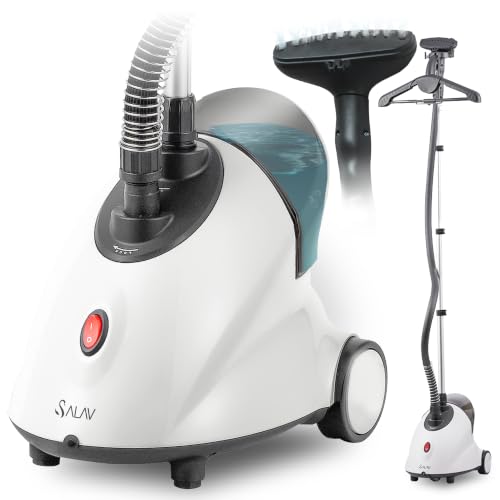
- POWERFUL 1500W STEAMER – HEATS IN 45 SECONDS: Quickly smooth wrinkles with the SALAV GS18 Professional Standing Garment Steamer for Clothes, delivering up to 1500 watts of
- FAST WRINKLE REMOVER FOR ALL FABRICS: Refresh and smooth clothing, dresses, shirts, bedding, curtains, upholstery and more. Gentle steam works across fabrics including silk
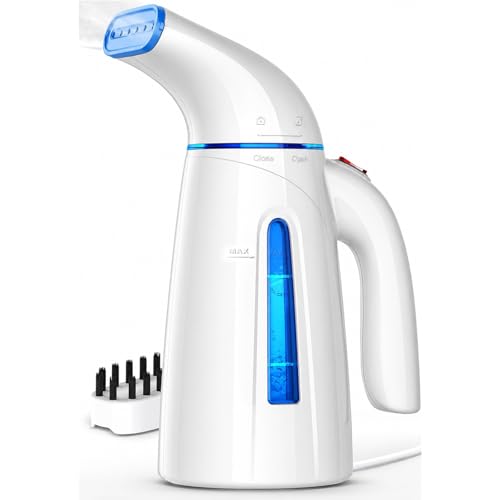
- 240ML capacity, this steamer for clothes produces 15 minutes of continuous steaming to remove wrinkles perfectly
- Leading technology, unique 304 stainless steel heating panel ensures anti rust, anti oxidation and much longer life span than other materials like aluminum
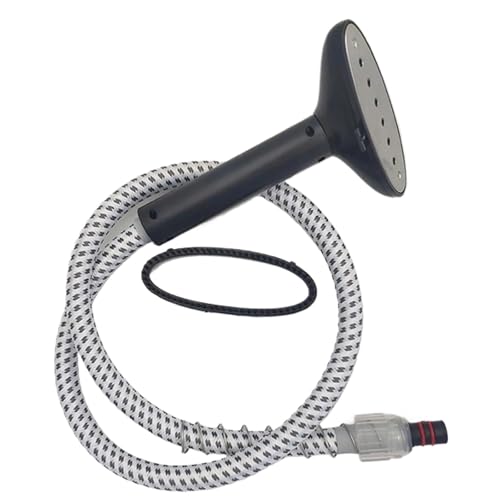
- Panel:15.5cmx6cm/6.10inchx2.36inch
- hose connector:2cm/0.79inch
The Problem: Most People Steam Like They Iron
The usual failure is pressure. People jam the steam head into a wrinkle and hold it there, which soaks one patch, leaves a water mark, and does nothing to the crease. Wrinkles fall out when hot vapor penetrates the fiber and gravity pulls the fabric straight. Your job is to deliver heat and let weight do the work.
The second failure is temperature confusion. A steamer has no fabric dial the way an iron does. You control exposure by distance and by which side of the cloth you work, not by a setting.
Step-by-Step: The Core Technique
- Fill the tank with water and let the unit heat until steam runs steadily, not in sputters. Early spitting is condensate, and it is what spots silk.
- Hang the garment on a sturdy hanger, ideally where it can swing free. A shower rod or a doorframe hook beats a closet rail crammed with coats.
- Point the head down and purge a few seconds of steam into a towel to clear condensed water from the hose.
- Grip the hem or a seam with your free hand and pull gently downward. Tension is doing half the work.
- Start at the top and draw the head down in overlapping vertical passes, keeping light contact through the cloth.
- Flip to the inside for anything shiny, napped, or dark. Steaming from the reverse removes the risk of glazing the face.
- Let the garment hang and dry for a few minutes before wearing. Warm damp fibers re-wrinkle instantly if you fold them.
Fabric by Fabric
Can you steam silk?
Yes, with distance. Silk handles steam far better than it handles a hot soleplate, but liquid droplets leave rings. Hold the head an inch or two off the surface, steam from the inside, and never let the nozzle rest against the weave.
Steaming wool suits at home
Wool is where a steamer genuinely outperforms an iron. Vapor swells the fiber and lets a jacket recover its shape, which is exactly why tailors steam rather than press finished garments. Steam the lining side of the body panels, keep the head moving across lapels, and do not attempt to sharpen trouser creases with steam alone.
Cotton and linen
Both take direct contact and a slow pass. Heavy linen is stubborn. Expect to make several passes and accept a softened wrinkle rather than a flat one.
Polyester, rayon, and blends
Synthetics respond fast and can also glaze or pucker if you park the head in one spot. Keep moving and check the care label for a crossed-out iron symbol before you start.
What fabrics should not be steamed
Suede, most leathers, waxed or coated cotton, plastic-based sequins and appliqués, and anything with glued embellishment. Water and heat will lift adhesive and stiffen skins. Structured items with fusible interfacing at the collar or placket can bubble too.
Tools and Products You Will Need
SALAV GS18 Full-Size Clothes Steamer - 1500W Power
Amazon's listing for the SALAV GS18 Full-Size Clothes Steamer - 1500W Power states a 1500W heating element, a 1.8L water tank, and 60 minutes of garment steam per fill. Read that as a run-length claim, not a comfort claim: an hour of continuous output is the kind of figure that matters when you are working through a rack of suits or a set of curtains, and it is the reason a standing unit is the honest recommendation for wool tailoring at home. That same listing describes an adjustable pole and wheels for easier storage and movement, which is what lets you hang a garment on the built-in pole and keep both hands free for tensioning.
Pros: Highest listed wattage and largest listed tank of the three products here; pole and wheels make it a park-and-work unit.
Cons: It is a floor-standing appliance with a hose, so it is useless for travel and needs storage space. The listing does not publish a warranty length, heat-up time, or steam output rate, so those remain unknown.
OGHom Steamer for Clothes
Amazon's listing for the OGHom Steamer for Clothes lists a 240ml water capacity, 700W of power, and 120V-only operation. Two inferences follow. A 240ml reservoir is a one-or-two-garment tank, so this is a touch-up tool rather than a wardrobe tool. And the 120V-only note is a real constraint: if you are packing for a 230V country, this is the wrong steamer to bring, and no plug adapter fixes a voltage limit.
Pros: Handheld and travel-sized by design; 240ml is enough water for a shirt and a pair of trousers before a refill.
Cons: The 120V-only restriction rules out most international travel, and 700W is under half the SALAV's listed wattage. The listing does not state heat-up time or continuous run time.
HLSONHENGM Clothes Steamer Guide Hose with Brush Steamer Pipe Garment Steamer Parts High Performance Replaces Parts Steam Nozzle
Be clear about what this is. The HLSONHENGM Clothes Steamer Guide Hose with Brush Steamer Pipe Garment Steamer Parts High Performance Replaces Parts Steam Nozzle is listed on Amazon as a replacement guide hose with a brush and steam nozzle, not as a steamer itself. It belongs in this guide only because a split hose is the most common way a standing steamer dies, and a hose that leaks steam mid-run is also the thing that dribbles water onto your silk.
Pros: Bundles the hose, brush, and nozzle together, which covers the parts that wear or clog first.
Cons: The listing does not publish a compatibility list of steamer models, hose length, or fitting diameter, so you cannot confirm from the listing alone that it fits your machine. Buy it only after matching your existing part.
Handheld Steamer Technique: What Changes
A handheld unit holds less water and sits closer to the fabric, so the technique shifts. Work in shorter bursts, refill without hesitation, and keep the body upright rather than tilting it, because tipping a small reservoir pushes water into the nozzle. Stretch the fabric across your free hand or a flat surface to substitute for the tension a hanging pole would give you.
Tips for Best Results
- Steam in a bathroom. Ambient humidity slows re-wrinkling while the garment dries.
- Use a hanger that matches the shoulder width. A narrow hanger sets a dimple you will then have to steam out.
- Empty the tank after every session rather than letting water sit in it.
- Give dark suiting a final pass from the inside to avoid any surface sheen.
Common Mistakes to Avoid
- Steaming before the unit is fully hot, which sprays droplets instead of vapor.
- Pressing hard, which flattens nap on velvet and corduroy.
- Skipping the care label. A crossed-out iron symbol is a warning worth reading before, not after.
- Wearing the garment while it is still damp, which sets fresh creases at the elbows and seat.
- Steaming glued sequins or coated fabric and expecting the adhesive to survive.
How We Research
This website does not run a lab and does no product research. For this guide, each product's figures were taken from its Amazon Creators API verified product record, retrieved 2026-09-05, and every number stated above is the figure the listing itself publishes. Where a listing is silent on a spec, that gap is stated as unknown rather than filled in. The CPSC publishes recall notices and safety information for consumer products, including household appliances, and is worth checking before buying any heating appliance.
Frequently Asked Questions
Final Verdict
For technique, the whole guide reduces to one habit: slow downward passes, gentle tension, inside-out on anything delicate.
For equipment, the split is clean. If you own wool tailoring and steam regularly, the SALAV GS18 Full-Size Clothes Steamer - 1500W Power is the sensible choice, because its listed 1.8L tank and 60-minute steam figure describe a machine built for working through several garments in one session rather than one shirt. If you mostly need to kill hangover creases from a suitcase and you are travelling within the United States, the OGHom Steamer for Clothes fits that job at a listed 240ml and 700W, with the firm caveat that its 120V-only listing rules out most trips abroad. The HLSONHENGM hose is a repair part, not an alternative to either.
Related Resources
- Steamer vs iron: which one your wardrobe actually needs
- How to descale a garment steamer
- Packing a travel steamer without leaks
Sources and Methodology
Nobody at this website steamed a shirt to write this page, and no product here was handled, timed, or measured by us. What we did do is read the Amazon Creators API verified product records for all three ASINs on 2026-09-05 and reason from the figures those records publish: wattage, tank volume, stated run time, voltage limitation, and whether the item is an appliance or a replacement part. For garment steamers that is enough to place a product correctly, since tank size and wattage largely determine whether a unit is a travel touch-up tool or a wardrobe tool, but it cannot tell you how hot the head runs or how long the seals last, and this page does not pretend otherwise. USA.gov's consumer protection pages point to where to file complaints about a faulty product.